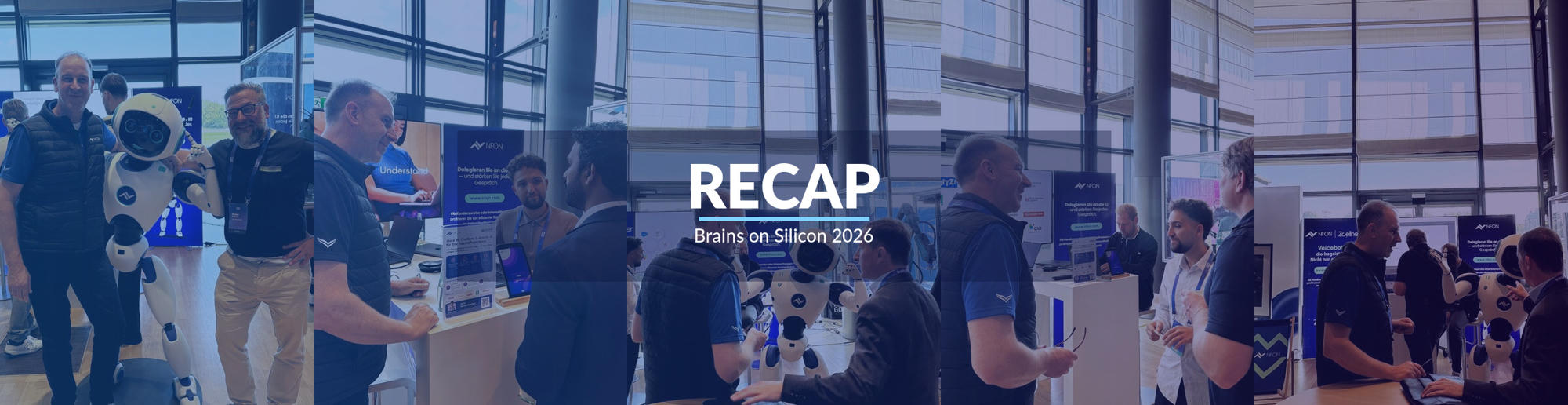
Recap: Brains on Silicon 2026 Dresden with NFON & Botario
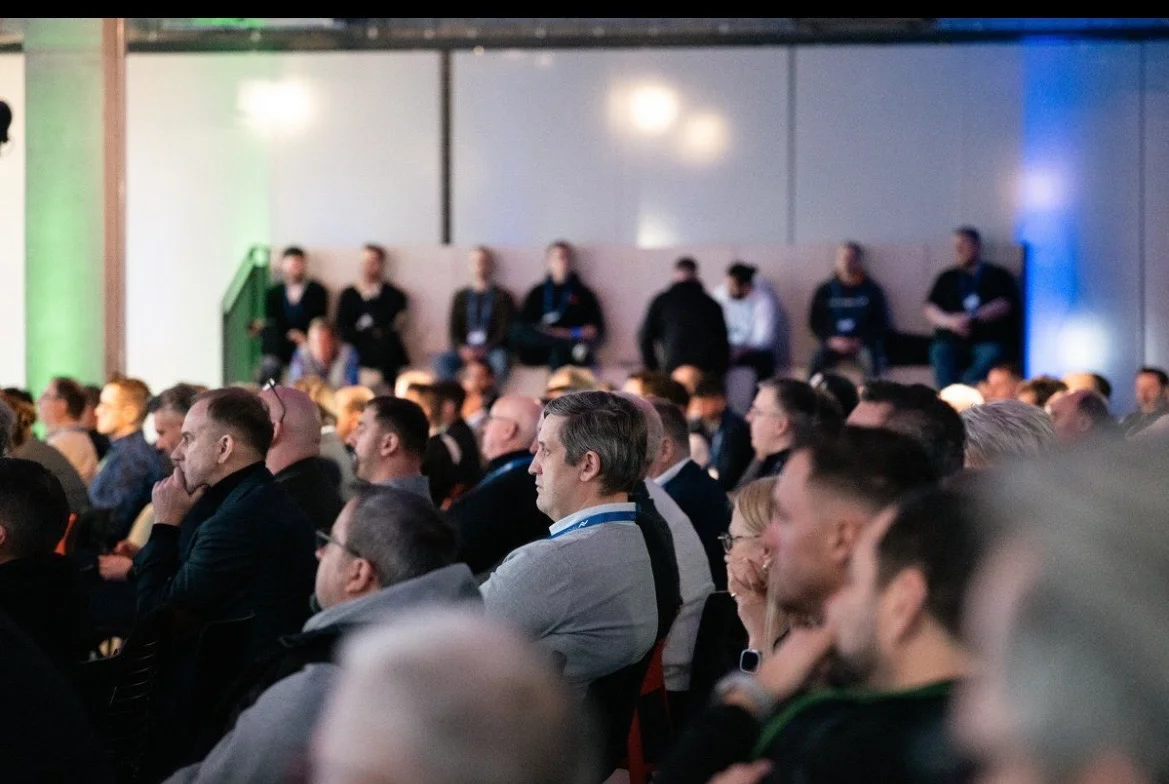
Anthropic, OpenAI and NVIDIA on stage, Richard Socher joining by video from Silicon Valley: the second Brains on Silicon on 14 and 15 September 2026 showed that Dresden now attracts international names for AI conferences. The motto was “Closing the Implementation Gap” – meaning the gap between what AI can do and how much of that is actually running inside companies.
At the stand shared by NFON and Zöllner Büro- & IT-Systeme GmbH, that gap was exactly the subject, but with a very down-to-earth use case: the telephone. And with one question visitors asked more often than any other: where does my data end up when a voicebot answers my calls?
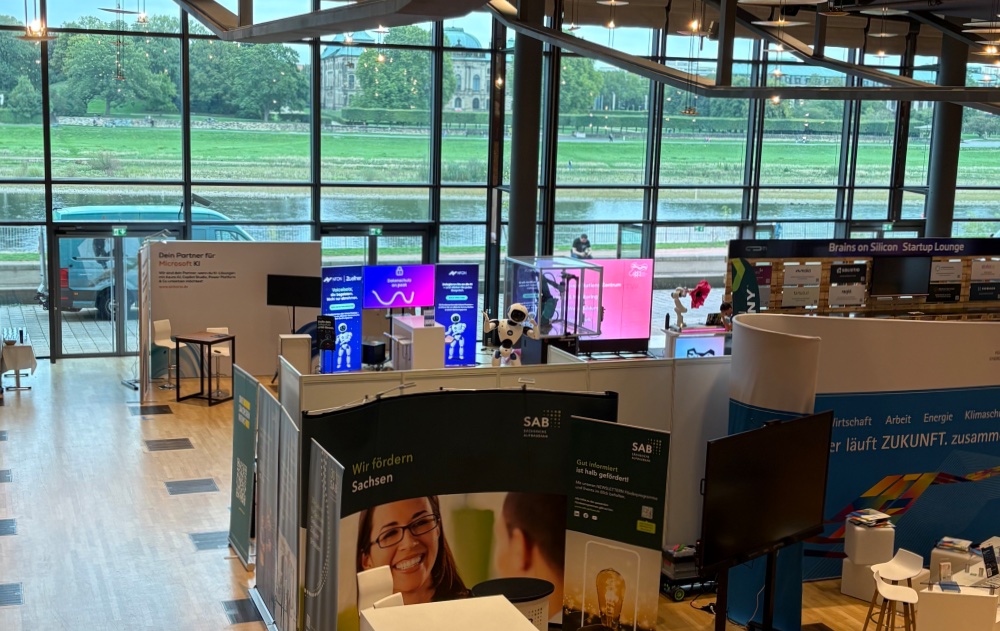
The programme at the ICD: four stages, two days
Day one was opened by Saxony's state minister Dirk Panter, Thuy-Ngan Trinh of A11 and Roman Howe, who runs the DACH and Eastern Europe region at Anthropic. They were followed by Stephan Ilaender of STACKIT, Jonas Rashedi of FALKE, Pierre Tempel of GitHub and Dr Daniel Dobos of AI for Good, among others. Richard Socher (You.com) answered questions from Jakob von Lindern, editor at ZEIT, in a video interview.
On the second morning, Sarah Kemether, who works in go-to-market at OpenAI, explained how companies introduce AI without getting lost in months of debate about principles. Later came Roland Eisenbrand (OMR), Elisabeth L'Orange of the Tech & Tales podcast, Stefan Wolk of the Fielmann Group and Maria Patelkou Konijnenberg of NVIDIA.
Thirteen young companies entered the startup contest; the three with the most community votes reached the final on the main stage. Raqid GmbH won, taking Anthropic credits worth 5,000 euros. Philipp Klöckner of the Doppelgänger podcast closed the conference with his keynote “Beyond the AI Hype”.
Digital sovereignty: public authorities and the chip industry ask in detail
On the stages, agentic workflows, physical AI and large language models from the US dominated. At the stands it sounded different. Peter Gemander, who exhibited for Zöllner as a development partner alongside NFON, describes it like this: visitors focused strikingly often on digital sovereignty. Participants from public administration and from the semiconductor industry in particular wanted to know who processes their call data, and where.
For Dresden, that is hardly surprising. Anyone working in a chip plant or handling citizens' enquiries at the town hall cannot simply route phone calls through any cloud server.
NFON has an argument here that Peter Gemander deliberately puts first: the company has been on the market since 2007 and has been a German company from the start. The AI behind it comes from Botario. NFON acquired the Bremen-based speech processing specialist in 2024, and according to Peter Gemander its AI expertise has been built in Germany since 2019.
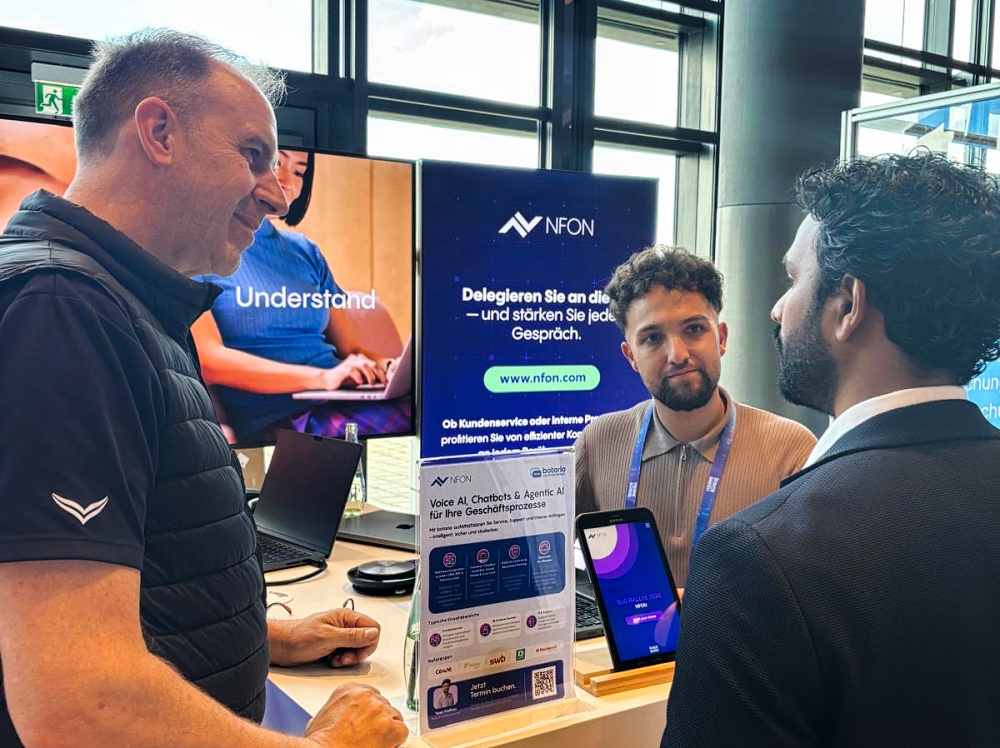
Botario: the customer picks the language model
The detail that was discussed most at the stand sounds technical but has practical consequences. The Botario platform is vendor-agnostic. Zöllner builds the application inside the platform – a phone bot for recurring customer enquiries, for example. Which language model that bot works with later is up to the end customer.
Anyone using a US model today who wants to switch to a European one tomorrow does not have to rebuild the whole solution. For the visitors from administration and industry, that was the decisive point.
NFON itself showed how AI bots and AI agents automate the enquiries that arrive in the same form every day: opening hours, appointment requests, status checks. Zöllner brought examples from projects already in production. The conversations then quickly turned to the real dividing line: which tasks can the bot take on, and where does a human still need to pick up the phone?
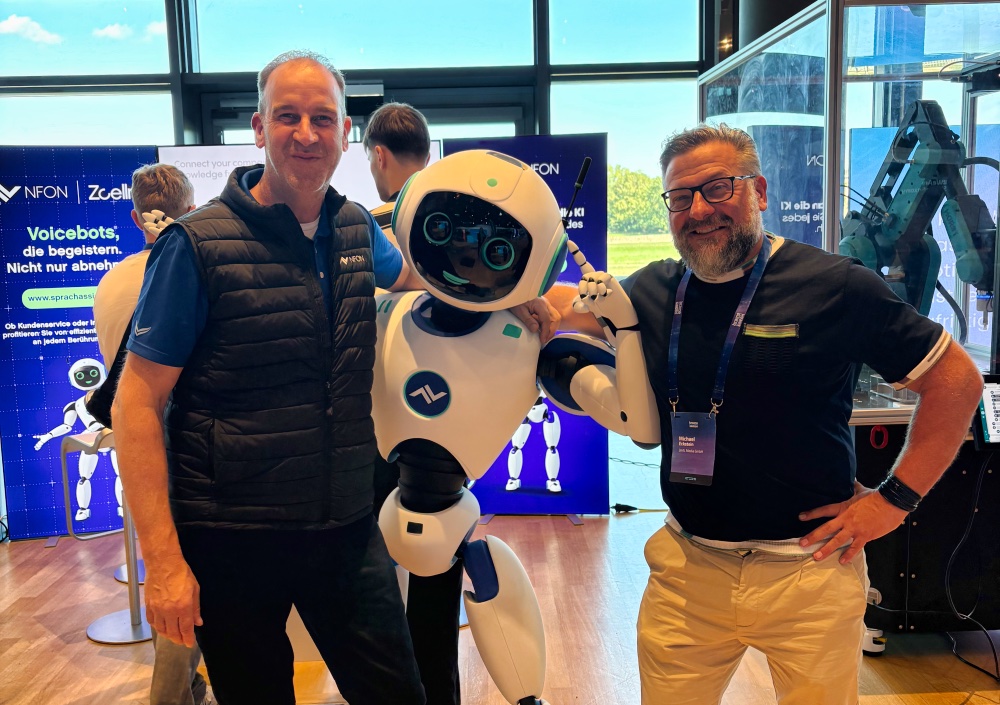
“Stick to what you know”
After the event, Peter Gemander put a sentence above his own contribution that almost sounds defiant at an AI conference. Zöllner has been doing telecommunications for more than 20 years. The team used to install classic hardware phone systems; today it combines cloud telephony with AI features. The standard, he says, has stayed the same: “We have to understand what we recommend to our customers, and stand behind it.”
For him, that includes the whole path. Advise, develop a solution, install it properly and then remain available as a service partner. Zöllner has its own developers on the team and builds interfaces itself. AI helps with that, but at Zöllner it does not replace a developer.
Peter Gemander knows the counterargument well. Some ask him why he still uses an ERP or CRM at all – surely you could quickly build that yourself with AI. He borrows his answer from an exasperated landscape gardener: “Just because I know the green bit goes on top doesn't make me a gardener.”
Which AI features Zöllner uses depends on the benefit in everyday work, not on the trend of the week. His example is unspectacular and convincing for exactly that reason: transcription of phone calls that genuinely saves time in the office. “And because I believe in virtues and craftsmanship,” Peter Gemander writes.
Frequently asked questions about Brains on Silicon 2026
When and where did Brains on Silicon 2026 take place?
On 14 and 15 September 2026 at the International Congress Center Dresden (ICD). It was the second edition of the conference for applied AI.
Who won the startup contest?
Raqid GmbH prevailed against twelve other startups and received 5,000 euros in Anthropic credits.
What is Botario?
An AI platform for speech processing and automated customer communication, for example voicebots and transcription. Botario is based in Bremen and has been part of NFON AG since 2024.
What does “vendor-agnostic” mean for a voicebot?
The application is not tied to one specific language model. The customer decides which LLM runs in the background and can switch later on.
More articles

NFON Intelligent Assistant: turning calls into CRM knowledge
Nia, Nia FrontDesk and AI Essentials working together: transcript, summary and tasks are handed over to CRM fields under control.
Hackathon runners-up at Nexus Connect 2026
60 participants, 9 teams, 90 minutes: a working voicebot for administrative switchboards and second place.