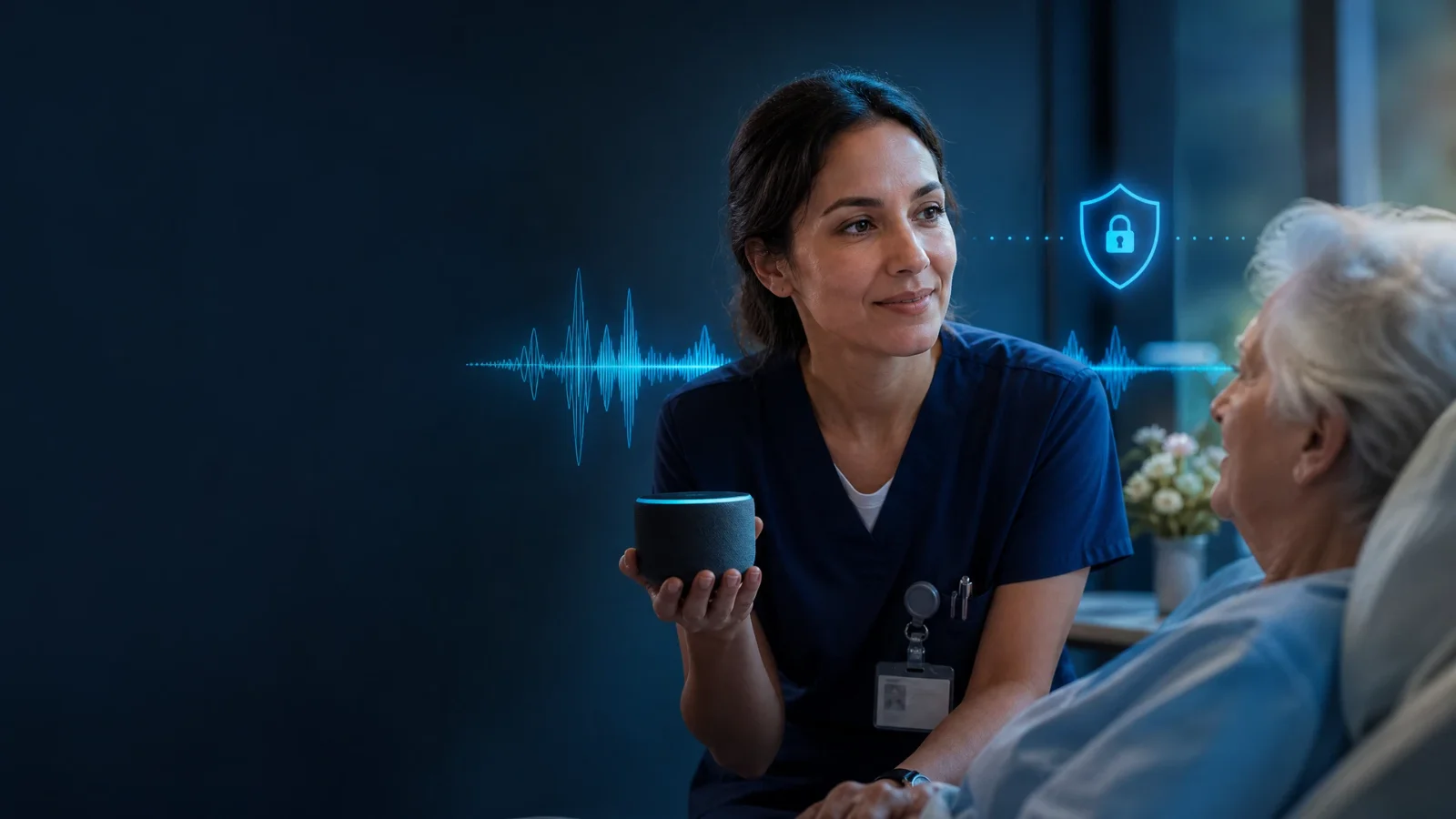
The phone rings. An elderly woman in Dresden asks when a home emergency call system can be installed. A young man is looking for the nearest advice centre. A carer wants to know whether her shift starts tomorrow or has moved. It all lands in the same queue, all waiting for a human voice that is not available right now. This is where voicebots come in.
What a voicebot actually is and does
A voicebot is a voice-controlled system that answers calls automatically, passes on information, books appointments or pre-qualifies enquiries. Unlike classic phone menus, a modern voicebot understands natural language. Callers press no keys; they simply speak.
For organisations in healthcare and social care that means being reachable around the clock, without extra cost and without overloading staff.
Why now is the right moment
The shortage of skilled staff in care is no longer a future problem; it is everyday reality. Call centres in social organisations are thinly staffed while enquiries keep rising. At the same time people expect fast answers – in the evening and at weekends too.
Better speech recognition
Today’s systems understand dialects, older voices and hesitant phrasing. The error rate has fallen sharply.
Lower cost
What used to be reserved for large hospitals is now economically viable for mid-sized social organisations.
Changed expectations
People who use voice assistants every day find it normal to meet an intelligent system at a care organisation too.
Voicebots at the German Red Cross: concrete use cases
The German Red Cross runs care services, transport services, clothing banks, advice centres and disaster relief units. Each of these areas handles high daily call volumes with recurring questions.
A voicebot for the Red Cross could:
-
answer questions about opening hours and locations automatically
-
take appointment requests for care services and route them to the right office
-
record donation enquiries in a structured way
-
serve as the first point of contact for citizens in a disaster
-
relieve emergency staff by automating routine communication
It is precisely the combination of emergency communication and everyday service that makes a voicebot a serious topic at the Red Cross – not a convenience feature but a piece of infrastructure.
Johanniter: a voicebot easing the daily care workload
Johanniter-Unfallhilfe is one of Germany’s largest providers of ambulance services, care and social work. In Saxony alone the organisation runs numerous sites with hundreds of patient contacts a day.
A voicebot at Johanniter could:
-
record requests for outpatient care appointments automatically
-
explain the home emergency call service and guide new customers through registration
-
take callback requests in a structured way and route them to the right team
-
provide information about short-term or day care without a specialist having to answer the call
The key point: care staff are not replaced. They are freed from phone work that does not require human contact.
Malteser, AWO, Caritas: all benefit
The principle applies across the sector. Malteser, Arbeiterwohlfahrt, Caritas and the German Youth Red Cross face the same challenges: high call volumes, tight staffing and the expectation of being reachable around the clock.
A voicebot is not a one-size-fits-all product. Every organisation needs its own configuration: different service areas, different language rules, different interfaces to existing systems. The underlying technology, though, is the same.
What makes a good voicebot in social care
Speaking to people in difficult situations carries responsibility. A voicebot in healthcare therefore has to meet different standards than an ordering system for pizza delivery.
Empathetic conversation
The language has to be calm, clear and easy to follow. Older people are an important audience – speaking rate and sentence structure must reflect that.
Transparency is mandatory
Callers must know they are speaking to an automated system. No disguising, no imitating human identities.
GDPR-compliant data protection
Health data in care needs particular protection. A serious voicebot processes only what the task requires.
Escalation has to work
If someone calls in an emergency, the voicebot has to recognise it and hand over to a person immediately. Always. With no detour.
Frequently asked questions
Conclusion: not a luxury but a necessity
Voicebots in social care and healthcare are no longer a future project. They answer problems that exist today: gaps in availability, overloaded staff and a rising volume of enquiries.
Organisations such as the German Red Cross, Johanniter-Unfallhilfe or Malteser that invest in this technology now do not create distance from the people they help. They create capacity to be present where it counts: in personal conversation, in direct care, on call-out.
“The voice on the phone does not always have to be human. But it always has to be helpful.”